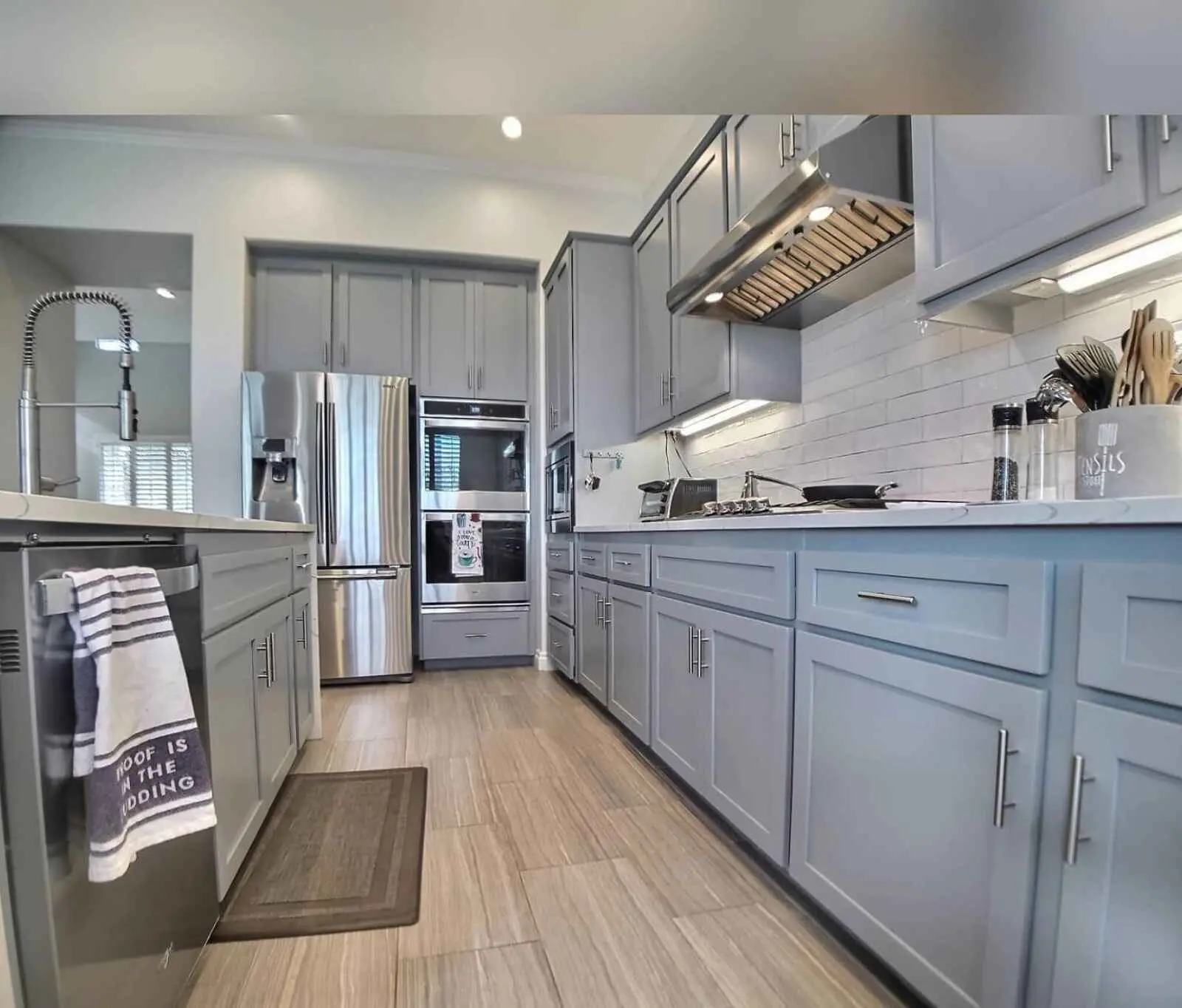
More Than a Color ChangeCabinet painting succeeds or fails during preparation
Kitchen cabinets are exposed to cooking residue, cleaning products, skin oils, moisture, and years of handling. Applying a new coating over contamination or a poorly bonded old finish can lead to peeling, fisheyes, bleed-through, or premature wear. That is why professional cabinet repainting begins with inspection and cleaning rather than a quick coat of paint.
Surfaces are cleaned, abraded, and repaired according to the written scope. Primer is selected for the substrate and existing finish. Stained woods may require additional stain-blocking preparation, particularly when the new color is white or off-white. MDF and HDF edges, damaged corners, silicone contamination, and previously failing coatings also need specific attention.
Doors and drawer fronts are removed, labeled, prepared, and sprayed in a controlled environment. Cabinet boxes remain in the home, where counters, floors, appliances, openings, and adjacent areas are masked and protected. The completed pieces are reinstalled after the coating has reached the appropriate handling stage.